
Your film begins with an attempt to grow closer to your grandmother. Was there anything that the presence of the camera made possible, something that might otherwise have remained unspoken?
To be honest, I don’t think there was anything that only the presence of the camera made possible. Except perhaps time. The programme I was on, DocNomads, meant that I was living abroad and was pretty busy. In fact, I had started trying to get closer to my grandmother just before DocNomads began. Then she had a stroke that summer, just before I left for Lisbon for my first semester. And while I was there, I kept wondering whether she might no longer be alive by the time I came back.
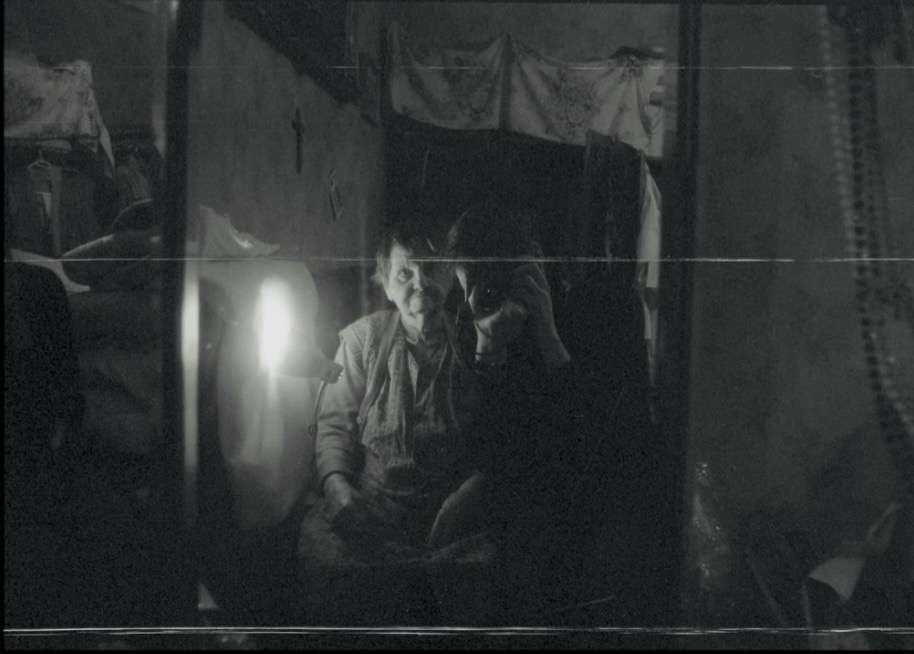
Fortunately, that wasn’t the case, and she is still in relatively good health. But the proximity, the possibility, of death made the need to get closer to her feel very immediate, while making the film gave me an opportunity to spend meaningful time with Omama, both mentally and physically.
Through your conversations, the social and historical circumstances that shaped your grandmother’s life gradually emerge. How much did you know about these before making the film, and what did you only come to understand during filming?
I had a superficial awareness of them beforehand. I had a rough idea of my grandmother’s class position. In filmmaking, I’ve always been interested in how a personal story, which is in some sense the starting point, is embedded in a wider social, historical and economic context.
Before making the film, I read Didier Eribon’s Returning to Reims, which became one of my main inspirations. It’s an autobiographical book that places great emphasis on social circumstances and uses them to analyse the author’s own life.
But to return to your question, I knew a story or two, yet it was really these conversations that helped me understand the everyday realities of my grandmother’s life under those particular social conditions. It also helped me understand my father, her son: who his mother really was, and how that shaped his life. And, indirectly, it helped me understand myself better too.
One interesting aspect of the film is that, while viewers may recognise the social roles and expectations that constrained your grandmother’s life, she herself does not necessarily question them. How did you approach this difference during filming and editing? Was it important to you not to impose your own interpretation on her story?
Her story, like any documentary, is not reality itself but a selective, curated reinterpretation of reality. So of course there is a degree of projection involved, and I don’t want to deny that. As I mentioned in my previous answer, I already had a particular perspective through which I interpreted things. That shaped my questions, as well as my decisions about what was worth including in the film and what I found interesting.
Of course, my grandmother doesn’t necessarily reflect consciously on these situations in social terms. But I’m someone who has moved between social classes, a first-generation intellectual, so to speak. I have the privilege of having acquired the conceptual tools that allow me to reflect on these things from a different, critical social-scientific perspective, and I tried to incorporate that into the film as well.
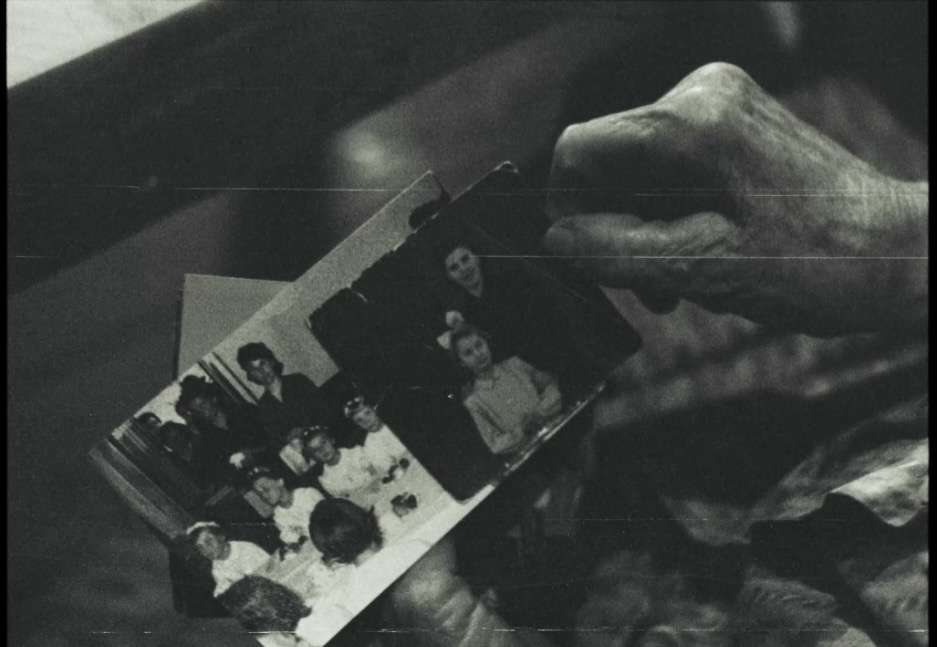
To some extent, one of my aims was that, after watching the film, people might begin to think about their own family relationships and where they come from, and that, beyond these entirely personal stories, social considerations might also occur to them and become part of how they interpret their own lives.
It was interesting, for instance, to watch the film with my father, who of course has his own narrative about my grandmother. I felt that afterwards he saw his mother a little differently, and that his own traumas within that relationship — the things he had lacked during childhood — were, if not resolved, at least cast in a slightly different light because the film brought those social circumstances to the fore.
What motivated your decision to use a form based entirely on still images? Were you concerned that this approach might feel insufficiently “cinematic”? And did your use of still images have anything to do with respecting your grandmother’s privacy?
I wasn’t worried about it being less cinematic. After all, what is cinema?
It’s an extraordinarily rich tradition, and obviously this isn’t the first film to use still images, nor will it be the last. My first significant encounter with this form was Chris Marker’s La Jetée. I remember it having a profound effect on me, even before I began making films.
I used to take photographs. I actually started because it seemed the easiest option — the most accessible way into an art form already connected to filmmaking. Along the way, I really fell in love with photography, and for a long time it was the main art form I practised. At the time, I thought that perhaps working with still images would be the next step towards filmmaking.
In the end, that wasn’t how it happened. I came to filmmaking through video journalism — I worked as an editor at Partizán. So using still images was also a long-standing dream, and perhaps that was one reason for the decision. But there were several others. For one thing, I was filming on my own.
I generally like working alone, but in this case I felt it was particularly important not to bring a crew with me. I don’t think my grandmother would have found it easy to get used to having a crew, a group of strangers, around her in such a short time. The film was shot very quickly — in no more than three or four days.
So that was one reason: to make it easier to create that sense of intimacy.
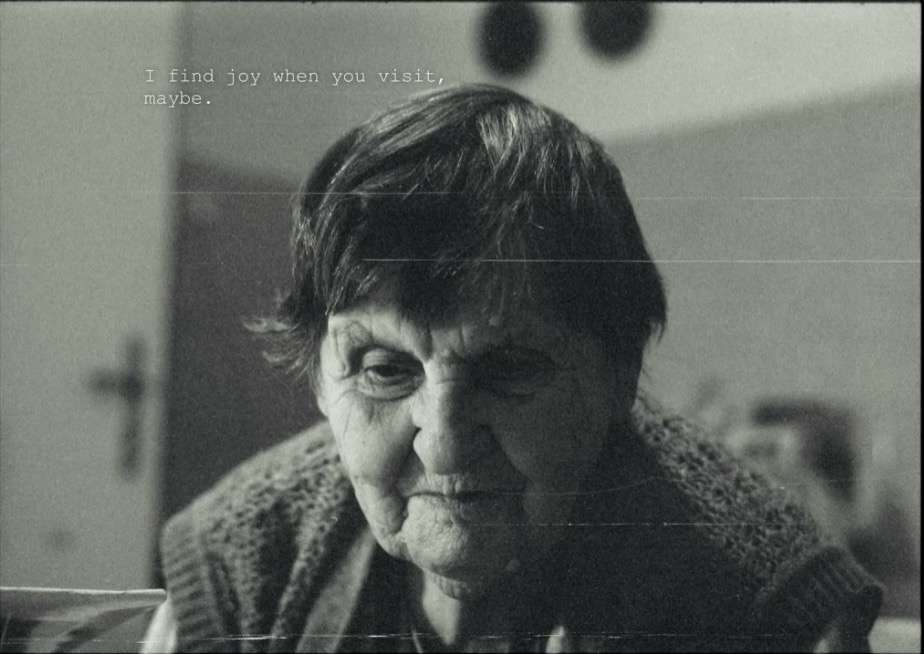
But obviously, when you shoot alone, you have to pay attention to the visual compositions, make sure the sound is recorded properly and, at the same time, remain present in the conversation. I felt that if I wasn’t constantly adjusting the camera, but just took a photograph now and then, I could be more involved in the conversation. That was a practical consideration.
There was also an aesthetic consideration. Because of my studies, I knew I was making the film for an international audience, which meant viewers would constantly have to read subtitles. And I think that if a great deal is happening on screen at the same time, their attention becomes too divided. With a single still image to take in, perhaps it’s easier to concentrate on the dialogue.
There’s another dimension of films made from still images that I really like: somehow, they engage the imagination more actively. Of course, with moving images too, we use our imagination to fill in what lies outside the frame. But here we can also imagine the movement within the image itself, and that’s why I felt the form would activate the viewer’s imagination more strongly.
My aim was that, as people watched, they would turn these still images into moving images in their minds. Perhaps it’s a kind of mental exercise. I think it’s important to train our imagination.
Beyond its use of still images, the film has a very distinctive style. What informed your stylistic choices — the black-and-white photography, the damaged images, the use of music and so on?
The damage to the images wasn’t intentional at all. I used a very old analogue camera — the one I’ve always used. It sometimes scratches the film. I suspect it had become dusty inside, and even a little dust can leave scratches on the film.
There was no deliberate damage. But I really liked the way the photographs had acquired that appearance by chance. It surprised me a little too, because my earlier photographs generally hadn’t been nearly so scratched, but I felt it suited what I wanted to do.
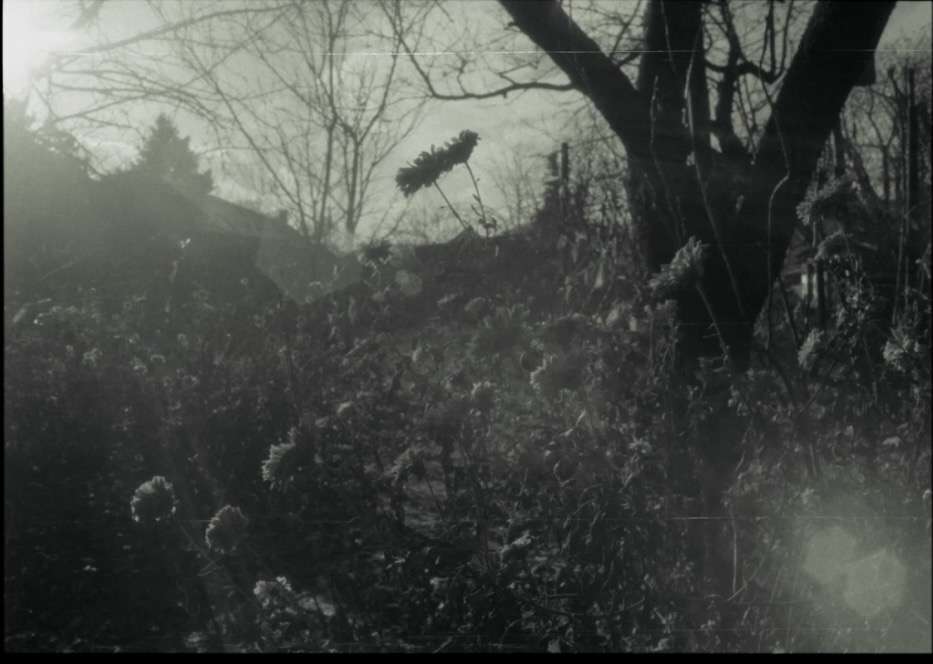
There were two reasons for choosing black and white. First, it was the cheapest option — and shooting on film isn’t particularly cheap, even when you’re not making moving images. Second, I like the minimalism of black-and-white photography: as a maker, you have fewer things to focus on. Light, contrast and lines somehow become more important, while colour is removed from the equation. That was part of it too.
I also felt that black-and-white analogue images were somehow connected to memory, to a certain sense of nostalgia, which obviously relates to the subject of the film. The film is also a kind of recollection, although I wouldn’t describe it as nostalgic.
Damage, imperfection, incompleteness — I feel these are fundamental characteristics of both memory and black-and-white analogue film.
Another factor was that the theme for our semester film that term was “Sound Before Image”. I didn’t exactly do what they had intended with that brief, but the point is that I had to wait for the scans of my film to come back from the lab, and there was very little time left before the screening. So I actually edited the film’s soundtrack before the images had even arrived, and I only received them a few days before the screening. Naturally, I was anxious to see what they would look like, and what was actually in them. There’s always that excited anticipation when you shoot on analogue film — you don’t get the instant encounter with the image that you do with digital photography.
As for the music, before filming I spent a lot of time thinking about the sort of atmosphere I wanted the film to have. I put together a playlist and sent it to a composer friend of mine, Bese Szórád, who wanted to try his hand at composing film music. I gave him a rough idea of what the film would be about, but I didn’t yet have an edit, or even the images. He made three samples, none of which had been mastered.
I fell in love with one of them, so I divided it into three sections, and that’s the music you hear in the film. In the end, it remained unmastered, in that raw state, which I really like — and he eventually agreed that it was better left that way.
How would you relate your film to the theme of “Facing something”?
I think there are many ways of facing our past and our roots. These days, I feel we tend to approach this through a psychological lens, which of course is perfectly valid. But I think it’s also worth looking at where we come from through a sociological or critical social-scientific lens: considering what our parents’ and grandparents’ lives were like, and thereby gaining a better understanding of who we are and of the society we live in today.
One reason I value this approach to facing the past is that, personally, it has often helped me arrive at a deeper understanding. Certain attitudes, patterns of behaviour, things people did in the past or failed to do — if you begin by considering the social circumstances in which they occurred, and what made particular approaches, thoughts or actions possible or impossible, then, by zooming out in this way, I feel I’ve been able to grow closer to both my parents and my grandparents in many respects.
This interview was conducted for the Hungarian Short Film Competition at the 2026 Verzió Film Festival.